18 February, 2013

Quick ways to stop Stress

When you over-task yourself, when you are not sleeping correctly, when nervous, or anxious, when freaking out in seconds, when stressed in general, what do you do ? Tripping on caffeine or badly prepared snacks do not lessen the effects. Are there quick ways to get out of the situation ? We all know what stress means, and we all know what stress can do to our bodies and health of mind. Some also know, that chronic stress, especially without pause or alleviation, can lead to some pretty nasty health conditions. It does not matter whether an office clerk, or multi-asseted business owner, the truth is that stress gets you, and it is usually sneaky at its onset.

The following are ways suggested by Mike Michalowicz, the CEO of Provendus Group, a consulting group that helps companies whose growth has plateaued to grow again. Michalowicz is also the author of The Pumpkin Plan and The Toilet Paper Entrepreneur, as well as one of the most popular entrepreneur blogs. Here are adapted form the original article (find it here) :

1. Breathe. Yep, we all do it until we’re dead. But most of us don’t do it right. Stress tends to make us shallow breathers. When you’re stressed, stand up and take long, slow, deep breaths—the kind you take before jumping into a swimming pool of cold water or before giving your kids “the sex talk.” Slow inhale, slow exhale. Do this at least five times. If you get dizzy, sit down. You’re probably not used to that much oxygen.

2. Laugh out loud. If there’s nothing funny in your life or office, turn to YouTube. Search on “Cats, Fail,” or “Epic Face Plant.” You’ll find lots to laugh out loud at. If you’re not near the Internet, think about something funny.

3. Put things in perspective. I used to think noises and distractions outside my office were annoying and stressful. Then Hurricane Sandy hit and suddenly I was walking to a shelter every day and working at a table with six other people. It put a lot of things into perspective. So did going from a net worth of millions to a net worth of whatever coins I could find in the couch, my ashtray and my daughter’s piggy bank. Think of the worst thing that’s ever happened to you, or someone you know and put your stress next to that.

4. Look at something awesome. Look at some great photos of sunsets, the ocean, mountains or even your kids, family, spouse or last vacation—except for the parts that stressed you out. Studies show just looking at something beautiful, awe inspiring or calming reduces stress. If you have something outside to look at, like a park, go sit on a bench. If you’re in a high-rise office, make sure you have some flowers, a painting or something nice to look at. It doesn’t have to be big. It just has to touch your soul.

5. Change location. Being able to teleport to a hot tub or a deserted beach somewhere would be awesome, but until that technology is available, the break room or bathroom will have to do. If that sounds depressing (and it does, doesn’t it?), then step outside instead. Walking to the vending machine or coffee pot or taking the elevator to another floor and wandering around pretending to be lost is an option. The point is to change locations and get away from the place (or person) stressing you out. The walk there and back and even a different environment can reduce stress in a matter of minutes.

6. Plug in. The right music can calm any stress. Don’t turn on heavy metal or something raging that you’d workout to. Try something more mellow and happy, or something that reminds you of good times. Relax into it.

7. Stretch. Yeah, crazy right? But it works. Stand up and stretch. Move to a doorway and push on either side of the doorframe. Twist. Sit down and put your legs out in front of you and point your toes. Find a stairwell and do some standard runner’s stretches. Google “stretching” to find something if you’ve put your high school gym class behind you.

However, no technique is going to work if you’ve let stress build up. The minute you start to feel stressed, address it head on. Hydrate (even being dehydrated by 2 percent can be stressful to your body. Coffee and soda don’t count). Drink water. Sip it throughout the day. Get some regular exercise, even if it’s just walking to the fast-food place or taking the stairs instead of the elevator. Physical activity (even simple such as a brisk walk or regular running) can drain stress better and faster than a juicer crushes fruit. Finally, figure out what’s causing the stress and eliminate it as much as possible.

new lego X-WING starfighter

Well, I guess you all know LEGO. In case you don’t, Legos began in the workshop of Ole Kirk Christiansen (7 April 1891 – 11 March 1958), a carpenter from Billund, Denmark, who began making wooden toys in 1932. In 1934, his company came to be called "Lego", from the Danish phrase leg godt, which means "play”. Lego, consists of colorful interlocking plastic bricks and an accompanying array of gears, minifigures and various other parts. Lego bricks can be assembled and connected in many ways, to construct such objects as vehicles, buildings, and even working robots. Anything constructed can then be taken apart again, and the pieces used to make other objects. Lego began manufacturing interlocking toy bricks in 1949, since which a global Lego subculture has developed, supporting movies, games, competitions, and six themed amusement parks.

Case in point, the company has revealed that a new Star Wars X-wing starfighter set will be coming out in May. Rejoice ! The set, officially coded 10240 and titled “Red Five X-wing Starfighter”, will be available for approximately 200USD, or 200EUR. That's a nice sum of money to drop on a Lego creation, but it's not all that uncommon for their larger sets. It does include over 1500 tiny plastic pieces after all, and licensing the Star Wars name and other trademarks isn't cheap. If you want to hear all about the design straight from Lego, they've released this detailed video :


From LEGO official announcement :
“Collect and create the most highly detailed LEGO® Star Wars™ X-wing Starfighter ever produced. This iconic starfighter is featured in many of the most exciting Star Wars battle scenes, including the decisive battle scene above planet Yavin™. Recreate the moment when Luke Skywalker’s X-wing delivered the proton torpedo that led to the destruction of the Imperial Death Star! With 1,558 pieces, this realistically detailed model features opening wings and cockpit, a special display stand, data sheet label and R2-D2.”

Quick info :
Ages 16+
Includes 1558 pieces
Includes R2-D2 atromech droid
Features highly authentic detailing, and opening wings and cockpit
Measures over 10″ (26cm) high, 20″ (52cm) long and 18″ (46cm) wide
Includes display stand and data sheet label!
Available for sale beginning May 2013
Retail (approx) 200USD, 200EUR

16 February, 2013

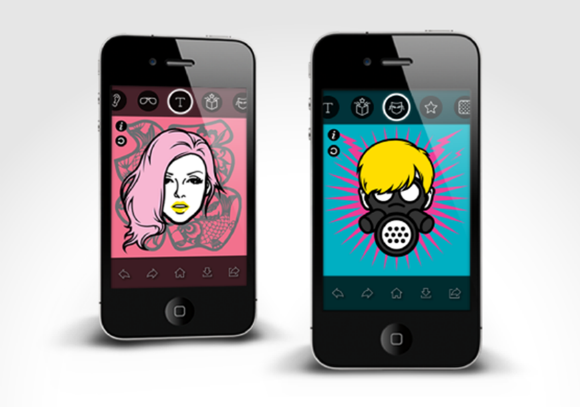
the iMadeFace craze

According to the iMadeFace Facebook page the app has become number 1 in; United States, United Kingdom, Canada, Thailand, Indonesia, Honk Kong, Taiwan, Macao, BruneiSingapore and many more! So when I said it was popular, I wasn’t joking. The main purpose for this arty little app, created by SW company Keyloft, was initially to make Caller ID’s for your contacts, best of all you have full control over each persons look. Alternatively, you could share your creations with friends to attach to your ID on their phone. [1]

What’s great about iMadeFace is that it’s quite simple to use. Just by swiping, you can create a customized cartoon face in minutes. Touch and slide to select different parts of the face. Slide left or right to choose different shapes or styles of that selected part (for instance, different shapes of the face, or different hairstyles), and slide up or down to change the colors.

Keyloft Chief Brand Officer Athena Wang told e27 that the team is “super excited” by how popular the app has become. “Now we are open to all of our fans for expectations and suggestions,” she said. “There are hundreds of emails received each day about what they are expecting. The new features and packs will soon be ready.” [2]

“We are trying to combine pop art and traditional Chinese printmaking, and create the new Asian pop art. The lines and shapes of traditional Chinese printmaking can create varied details of features of different people, which can create better motions,” she said. [2]

iMadeFace is currently available only for iOS, however an Android version will be available soon. You can download iMadeFace for free, here. Check out the iMadeFace page on tumblr as well.

Building of 2012 Awards, by ArchDaily

ArchDaily was founded in March 2008, with a goal to be the online source of continuous information for a growing community of thousands of architects searching for the latest architectural news: projects, products, events, interviews and competitions among others. Over the last year ArchDaily has kept growing, reaching more than 280,000 daily readers and 70 million pageviews per month.

One of the yearly features of ArchDaily, is their Building of the Year competition, drawing attention with voters from around the globe. This year and after 70,000 votes they presented the winners of the ArchDaily Building of the Year Awards, for 2012, a peer based, crowdsourced, architecture award where a collective intelligence of thousands of architects filter and recognise the best architecture featured on AD during 2012.


This selection of buildings is unique in several aspects, from their spatial qualities to their structures, but also in terms of what they represent for society and their impact on local communities. Go, and check them out.

This is a CookBook

Get into the kitchen. Learn to cook real good food. Make it crazy delicious. And don’t be too worried about a little mess. In “This is a Cookbook: Recipes for Real Life”, culinary brothers Max and Eli Sussman – Brooklyn-based chefs – share more than 60 killer recipes that demystify the cooking process for at-home chefs, call on everyday ingredients, and pack in tips for how to make life in the kitchen easier and frankly, more fun ; no matter how small your kitchen.


This creative, digitally enhanced cookbook includes step-by-step guides for cooking techniques, behind-the-scenes audio interviews and photo shoots, and even music to enjoy with your food. The chapters are organized by meals and events, like “Lazy Brunch,” “Midnight Snacks,” and “Night In,” and in addition to recipes, give tutorials for important skills like home-making bacon.

The audio tracks littered throughout the e-book are used by the authors to give fun background tidbits and share the stories behind the recipes. This desire to share a bit of themselves through their recipes was, in fact, a big factor in Max and Eli’s decision to create an e-book. But the feature that really makes this book shine is the iTunes playlists tailored for each menu—they’re embedded in the cookbook and allow you to purchase the songs directly from iTunes. Download for iOS available here.

Company popularity & stock performance

I saw this very interesting infographic the other day, that in a very visual manner, conveys a simple truth often to be realised with pain by various stockbrokers around the world : It takes more than popularity, or company image, to reflect on a company’s stock value or general performance in the stock market. Once in a while, a disconnect between companies that are popular with consumers and companies that are popular with investors, is realised.


This infographic aims in pointing out that fact, picking out three companies that are loathed by many but the favorite of many investors, and three companies that are loved by consumers but might cause investors to be more wary. Created by GreatBusinessSchools.org, the infographic taps sources such as BusinessWeek, Bloomberg, Forbes and The Wall Street Journal, resulting in a boatload of illustrated data.

Philip Morris might be one of the companies people might hate because it makes cigarettes, a product that kills people. But even though its product (and that of other cigarette companies) causes 5 million people to smoke themselves to death each year, investors seem undaunted. They're apparently more interested in the fact that Philip Morris stock is up 95% over the past three years, beating the S&P 500 index by a mile (it only climbed 19% in the same period).

The ubiquitously beloved Apple didn't get past the unwavering gaze of these researchers, who noticed the recent precipitous drop of the company's stock, falling 18% since late October and wiping out more than $100 billion of market cap. The infographic notes how investors are becoming more wary of the Cupertino company, as well as the stock of Facebook and Microsoft. Given the noticeable fall in the trio's stock prices, the wariness of investors is showing up in the fact that there are more sellers than buyers of those three stocks.

13 February, 2013

How many slaves work for you ?

Slavery Footprint is an online experience and mobile app that launched on the 149th anniversary of the announcement of the Emancipation Proclamation and can tell you approximately how many slaves have pitched in to make the goods you enjoy on a daily basis. A survey built in HTML5 to be accessible from desktop and tablet, directed by Robert Bader to increase awareness of people’s slavery footprint.


You may not think that slavery is still a major problem worldwide, and you’d be wrong. There are more slaves bought and sold today than at any point in human history. But how many work for you? Who is digging up the minerals in your smartphone or picking the cotton for your T-shirts? The issue of forced labor continues to drift in and out of the social consciousness but hasn’t successfully yet stuck in people’s mind.

The challenge has been to hit people with more hard facts and sustain their attention.

“Every citizen can take action: www.slaveryfootprint.org! By speaking up and insisting that the clothes we wear, the food we eat, the products we buy are made free of forced labor…” 
[Barack Obama - 44th President of the US, September 2012]

The site, created in a collaboration between anti-slavery nonprofit Call+Response and the State Department’s Office to Monitor and Combat Trafficking in Persons, uses a complex algorithm to calculate how many slaves work for you based on 11 questions, including how much jewellery you own, whether you’re a gadget geek, what’s in your medicine cabinet.

The site was created by UNIT9 is a multidisciplinary production company. You can view the credits here. To take the interactive survey, please go here.

Quartermaster motorcycle

The Quartermaster is a URAL x ICON collaborative project designed to increase the long distance off-road capacity of the URAL Solo. Devoid of the sidecar found on most URALs, the Quartermaster was a single-track beast of burden. Extensive frame modifications, including an oversized backbone, braced headstock, and high clearance subframe, differentiated the Quartermaster from her stable mates. Reinforced swingarm, long-travel suspension, and knobbed tires provided a surefooted stance when the road ended.

The oversized fuel tank, fitted with frisco’d feed lines, made available every ounce of fuel for maximum operational range. Custom skid plate, crash hoops, and high-mount fenders all spoke to her mastery of the unimproved path. Lathered in haze grey from stem to stern, she would survive where so many others had fallen. Ironically, the Containment Conflicts had turned The Quartermaster’s workaday looks and antiquated performance specs into the most desirable traits of beauty. Time has a way of evening things out.

Do you want to bang your friends ? Do you, … really ?

Now there's an application that gives a whole new meaning to the phrase “hanging out with friends”, and unquestionably can spice up your social life ; either for good or for bad, that is your decision to make. You see, to use an argument that has been mostly utilized to criticize political systems, this application  is glorious in its conception, but I’m afraid fails miserably when it comes to its actual use.

Bang with friends, is a short (in terms of time taken to realize) collaborative effort of three college students, wanting to give a twist to the term “mingle”. According to FastCoDesign’s initial presentation article : “Bang With Friends is the simplest, most disruptive app Facebook has seen in a long time”. Read the presentation here. “The premise is so obvious, you’ll kick yourself for not thinking of it first. You install the app, then the app lists your Facebook friends of the opposite sex. You click if you’d like to “bang” them, and no one ever knows . . . that is, unless one of those friends installed the app and elected to bang you, too. Bang With Friends makes finding a mate as easy as window shopping on Pinterest”.

Allright, one more time. You sign up, using Facebook. It won’t show up on your newsfeed or profile, but you will be able to see who is already using the app, and when signing up, future users will be able to see that you’ve signed up too. That means you get a page full of your friends that are “down to bang”. Next, you select the Facebook friends that you’d like to bang. They won’t know that you want to bang them unless they sign up and are interested in banging you too. Once both parties express interest, the site will send both of you an email notifying you that the other is ready to rumble, and the rest is up to you.

And there is where the fun – or potential problems begin – depending on how you look at it. As you all are aware, in your FaceBook friends list, you have also members of your family (mother, a younger sister, maybe), colleagues, etc. ; possibly people that you DO NOT want them to know your “availability” status, or even worse you DO NOT wish to find out what is theirs !

I guess some ... filtering ... of some sort, might help. No matter how fast the app may have been drafted, I guess what stated above is “basic” thinking, ... right ? Well, unless of course the application’s purpose is different to the one stated.

According to the creators the popularity of the application, increases by the minute. On the other hand a similar application “Bang With Professionals” attempting to promote an identical concept over LinkedIn, was shut down by the social net’s admins. Well, for more insight and criticism read here and here. Best of all try it yourself, that should keep the word of mouth circulating, and let you form your own “personalized” opinion. Either nice or lame, you will surely be down for a surprise. May I remind you also, that FaceBook already allows you to “poke” someone, should you wish to initiate something, and that now with FB Graph going about, you have the capability of sorting through your connections, to identify people that may be interested in a similar way to you.

Alternatively you may want to use Tinder or WouldLove2, that let's say take a more "conventional" approach to the whole matter.

12 February, 2013

the Wörgl experiment

The year was 1932 ; the world was gripped by the greatest economic depression (started in 1929) that it had ever known. One man in a small town decided to try something new to help the people of his community. In doing so the town made economic history. The town was Wörgl in the Bavarian province of Austria, and the man behind it was the towns mayor (elected 1931) Michael Unterguggenberger.

What follows is a republishing of the document originally published here, enhanced by views and analyses from other sources, to give you a rough context of the experiment, and its potential application in this modern era.

This is how the story goes
As a mayor, Michael Unterguggenberger had a long list of projects he wanted to accomplish. Projects like repaving roads, street lighting, extending water distribution across the entire town and planting trees along the streets. But in the midst of the depression out of the towns population of 4,500, 1,500 were without a job and 200 families were penniless.

Michael read and re-read "The Natural Economic Order" by Silvio Gesell. He talked with people in the town and convinced the members of the Wörgl Welfare Committee to hold a session on July 5, 1932. In this session he gave a short summary and then proposed a "Distress Relief Program". He stated that slow circulation of money is the principal cause of the faltering economy. Money as a medium of exchange increasingly vanished out of working people's hands and accumulates into the hands of the few who collect interest and do not return it back to the market. He proposed that in Wörgl the slow-circulating National Bank currency would be replaced by "Certified Compensation Bills". The council would issue the Bills and the public would accept the Bills for their full nominal value. Bills would be issued in the denominations of 1, 5 and 10 shillings. A total issue of 32,000 Wörgl "Money Bills" was printed and put into circulation.

On July 31, 1932 the town administrator purchased the first lot of Bills from the Welfare Committee for a total face value of 1,800 Schillings and used it to pay wages. These first wages paid out were returned to the community on almost the same day as tax payments. By the third day it was thought that the Bills had been counterfeited because the 1000 Schillings issued had already accounted for 5,100 Schillings in unpaid taxes. Michael Unterguggenberger knew better, the velocity of money had increased and his Wörgl money was working.

Wörgl money was a stamp script money. The Wörgl Bills would depreciate 1% of their nominal value monthly. To prevent this devaluation the owner of the Bill must affix a stamp the value of which is the devaluation on the last day of the month. Stamps were purchased at the parish hall. Because nobody wanted to pay a devaluation (hoarding) fee the Bills were spent as fast as possible.

Over the 13-month period the Wörgl money was in circulation, the mayor carried out all the intended works projects. The council also built new houses, a reservoir, a ski jump, and a bridge. The people also used scrip to replant forests, in anticipation of the future cash flow they would receive from the trees.

Six neighboring villages copied the system successfully. In January 1933, the project was replicated in the neighboring city of Kirchbuhl, and in June 1933, Unterguggenburger addressed a meeting with representatives from 170 different towns and villages. Two hundred Austrian townships were interested in adopting the idea.

The "economic miracle of Wörgl" was known internationally. The later French president Daladier visited Wörgl and reported in detail to the French parliament. The famous American money-theorist Irving Fisher sent an assistant to Wörgl. Fisher thought that the model would be able to overcome the US-recession. He classified himself as a "modest student of Silvio Gesell." But when hundreds of Austrian majors wanted to copy the Wörgl-model it was forbidden by the Austrian Central Bank. The bank classified the "work-confirmation bills" as money and felt its autonomy threatened. The actual positive and negative effects of the bills and of their own money were not thought worth reflecting on, neither for the officials of the Central Bank nor for most of the economists. As today, the money order was a taboo in these days. [4]

The truth is that the Central Bank panicked, and decided to assert its monopoly rights by banning complimentary currencies. The case was brought in front of the Austrian Supreme Court, which upheld the Central Banks monopoly over issuing currency. It then became a criminal offence to issue "emergency currency". Wörgl quickly returned to 30% unemployment. Social unrest spread rapidly across Austria. In 1938 Hitler annexed Austria and many people welcomed Hitler as their economic and political savior.

Germany was headed towards WWII and with the aftermath of the war much of what happened in pre war Germany just like what happened during the war was suppressed by the world. Germany was being rebuilt in the West's image. The Wörgl experiment was relegated to history.

the Good Stuff
The Wörgl experiment dramatically illustrates some of the common characteristics and major benefits of local currencies. According to  Bernard Lietaer, in his book “The Future of Money”, the following benefits are illustrated [1] :

1. increased rate of circulation – greater economic activity
Local currencies tend to circulate much more rapidly than national currencies. The same amount of currency in circulation is employed more times and results in far greater overall economic activity. It produces greater benefit per unit. The higher velocity of money is a result of the negative interest rate which encourages people to spend the money more quickly.

2. higher local resources utilisation – community booster
Local currencies enable the community to more fully utilize its existing productive resources, especially unemployed labor, which has a catalytic effect on the rest of the local economy. They are based on the premise that the community is not fully utilizing its productive capacities, because of a lack of local purchasing power. The alternative currency is utilized to increase demand, resulting in a greater exploitation of productive resources. So long as the local economy is functioning at less than full capacity, the introduction of local currency need not be inflationary, even when it results in a significant increase in total money supply and total economic activity.

3. consumption of local produce – community imports minimization
Since local currencies are only accepted within the community, their usage encourages the purchase of locally-produced and locally-available goods and services. Thus, for any given level of economic activity, more of the benefit accrues to the local community and less drains out to other parts of the country or the world. For instance, construction work undertaken with local currencies employs local labor and utilizes as far as possible local materials. The enhanced local effect becomes an incentive for the local population to accept and utilize the scrips.

Other examples
Some forms of complementary currency can promote fuller utilization of resources over a much wider geographic area and help bridge the barriers imposed by distance. The Fureai kippu system in Japan issues credits in exchange for assistance to senior citizens. Family members living far from their parents can earn credits by offering assistance to the elderly in their local community. The credits can then be transferred to their parents and redeemed by them for local assistance.

As Lietaer points out, in situations like the current economic (debt) crisis everything grinds to a halt for want of money. But he also explains that there is no reason why this money should take the form of sterling (or dollars, etc.) or be issued by the banks. Money consists only of "an agreement within a community to use something as a medium of exchange". The medium of exchange could be anything, as long as everyone who uses it trusts that everyone else will recognise its value. During the Great Depression, businesses in the United States issued rabbit tails, seashells and wooden discs as currency, as well as all manner of papers and metal tokens. In 1971, Jaime Lerner, the mayor of Curitiba in Brazil, kick-started the economy of the city and solved two major social problems by issuing currency in the form of bus tokens. People earned them by picking and sorting litter: thus cleaning the streets and acquiring the means to commute to work. Schemes like this helped Curitiba become one of the most prosperous cities in Brazil. [5]

Airline frequent flyer miles are a form of complementary currency that promotes customer-loyalty in exchange for free travel. The airlines offer most of the coupons for seats on less heavily sold flights where some seats normally go empty, thus providing a benefit to customers at relatively low cost to the airline.

While most of these currencies are restricted to a small geographic area or a country, through the Internet electronic forms of complementary currency can be used to stimulate transactions on a global basis. In China, Tencent's QQ coins are a virtual form of currency that has gained wide circulation. Though virtual currencies are not 'local' in the tradition sense, they do cater to the specific needs of a particular community, a virtual community. Once in circulation, they add to the total effective purchasing power of the on-line population as in the case of local currencies.

Give it a thought,
Society utilizes only a small portion of its resources and opportunities. Almost everyone has underutilized knowledge, skills and time that can be engaged productively. Most manufacturers and services have underutilized machinery or capacity. Complementary currencies are a creative means to enhance this untapped social potential. There has been a tremendous surge in the use of local currencies over the past two decades. Today there are over 2,500 different local currency systems operating in countries throughout the world. [1] Go there, and explore the whole article.

But also think about the Wörgl case on another level. The question is : Would the Wörgl currency have been just as effective without the demurrage feature, as with it ? Thomas H. Greco, Jr, attempts to answer on that in a lengthy article [2], where asserting that the situation was a bit more complicated than we, today, might have thought, proceeds by examining multiple sources and reports of that time, to conclude that : “…this supplemental medium of exchange had a very significant impact in improving, not only the financial condition of the local government (parish), but also the local business climate and general prosperity. Still, there can be no doubt that, being a local currency accepted only within the local economy, the Wörgl notes must have benefitted the local economy, because, unlike official currency, they could not be used to pay outsiders”.

Community Barter
In discussing these ideas, it is also important to understand the difference between community currency and community barter systems. [3]

A community barter system - like the LETSystem, which is not community currency - is usually based on voluntary organisational sharing of information about goods and services available from individuals in an area. The accounting is usually based either on time or the nationalised currency (pounds, dollars, etc). Such a system has three basic weaknesses: (a) It tends to be limited in scope to a handful of dedicated practitioners, usually in largely rural or semi-rural areas, (b) It does not cater for transactions outside the community, and (c) It encourages hoarding, rather than the circulation of wealth and energy, and can only expand by recruiting new producers - there are no 'built-in' inducements to encourage the circulation of goods and services.

A community currency, on the other hand, can be used by anyone in the community as a 'means of payment' for any commodity or service. The only limit to the expansion of its circulation is its acceptability, so it encourages all forms of economic activity. If suitable provision is made for 'convertibility', it can facilitate transactions with people and organisations outside the community, and indeed encourage community 'import replacement'. Also, of course, communities may agree - as they did in the Tyrol - to accept each other's currency at par.


Bibliography :
Silvio Gesell - The Natural Economic Order, access here.
Bernard Lietaer - The Future of Money, access here.
Peter North - Local Money, read a review here.
welcome dear reader.

blank

What you are browsing through is the initial form of a gazette, realised at this stage by a collection of posts brought together, from various fields & selected topics, aiming towards your entertainment and information. Some are own generated, others are processed re-ups from the blogosphere. Please feel free to browse, read, and distribute the content here.

blank

If you find what you read here as interesting, entertaining or thought-provocative, please tell it to your friends. New readers are always welcome. If you have copyright claims, please let us know, and we will amend accordingly.

blank

Images presented herein, are the property of their originators, unless stated otherwise. The METRONOME gazette wishes to declare that to the best of its knowledge, all photos and information presented in this website are true and valid, however it carries no responsibility as to the accuracy of the depictions, or wording of the posts, that are not of its own origination.

blank

Please do not hesitate to contact us with any inquiry or question you may have. See the Contact details section.
  

blank

about

blank

contact

blank

editorial

blank

theNEWSroom

blank

theMAGAZINErack

blank

DIY projects

blank

GAMESZONE

blank

GoingOUT

blank

Food4Thought

blank

PROJECTS

blank

blank

blank