13 January, 2014

the Ziferblat cafe concept

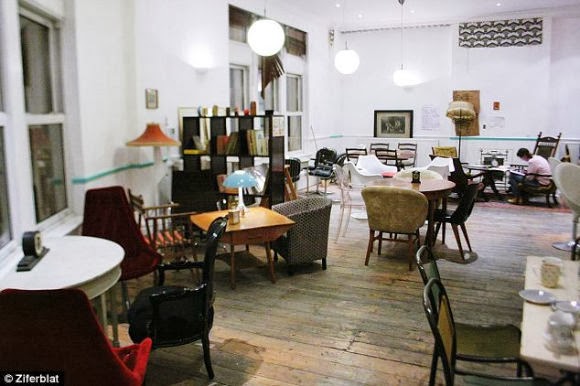
It was September of 2011 in Moscow, that the first ever Ziferblat was established. It was a relaxed feel-at-home / café / meeting place, that amongst other things formed as the place for new music start-ups, a place where goods were baked and jams were made, with a carefully selected library, and what ultimatelly became the proving gropund for most of the Ziferblat team’s ideas and projects. Now over 2 years from the original realisation date, the Ziferblat is counting 8 locations in Russia and one in London, UK, all interestingly diversified, but with a unique characteristic in their conception.

In London, an average cappuccino at a artisanal café costs around £2.65 (3.20Eur, 4.35USD) . At the newly opened Ziferblat café, you can get as many cappuccinos as you want for free – but there is a catch – you have to pay for every minute you spend there. The pay-per-minute café idea comes from Russia, where multiple Ziferblat cafés have popped up around the country in the last few years, after the original outpost in Moscow proved successful. Rather than paying for goods, customers are paying for the space and comfort. The cost at Ziferblat is 3p per minute (ie. £1.80 per hour, or 2.15Eur, or 2.95USD) – which means you could stay in the cafe for almost ninety minutes at the cost of that cappuccino. Whilst there you can tinkle on the piano, make yourself a coffee with the self-serve espresso machine or grab some cookies from the cupboard and milk from the fridge. It is like a friend’s apartment, where you feel perfectly comfortable helping yourself. [1]

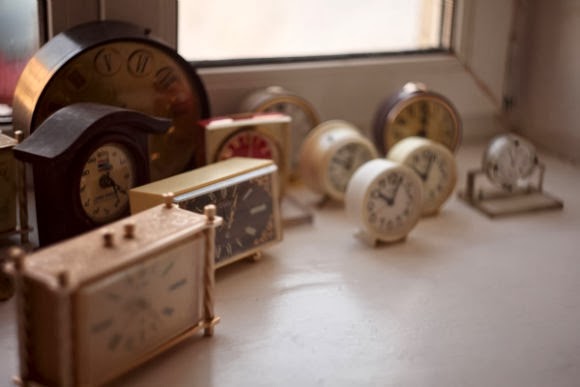
Ziferblat means clock face in Russian and German (Zifferblatt). The idea is guests take an alarm clock from the cupboard on arrival and note the time, then keep it with them, before, quite literally, clocking out at the end. There's no minimum time. Guests can also get stuck into the complimentary snacks (biscuits, fruit, vegetables), or prepare their own food in the kitchen; they can help themselves to coffee from the professional machine, or have it made for them. There's even a piano – an idea that could seem brilliant or terrible, depending on who takes the seat. [2]
In their own words : “Ziferblat is a place where everyone can feel at home. Here you are free to be yourself; you can work, do some art, read a book, play piano, get acquainted with good people, attend events, drink as much tea or coffee as you want — in other words, do whatever you like as long as you respect the space and the other people in it. Ziferblat’s doors are open to everyone. Each Ziferblat guest becomes a sort of micro-tenant of the space, responsible for it and able to influence its life. You will be welcomed by the Ziferblat community and able to work with them to help create, supply and develop this project. Everything is free inside except the time you spend there; and by paying for the time you’ll be making a donation towards the further development of this social experiment.”

21 December, 2013

being a prop stylist

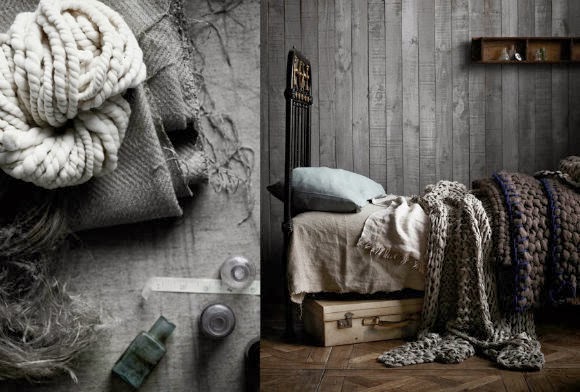
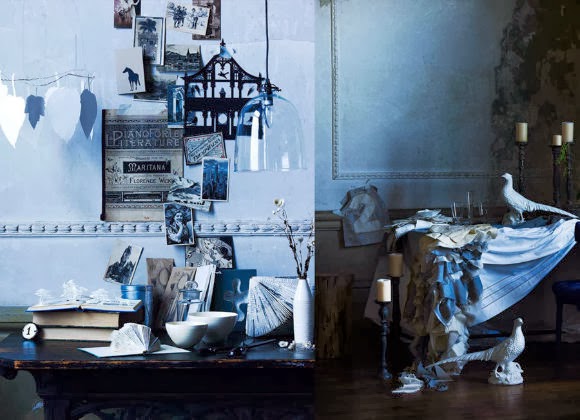
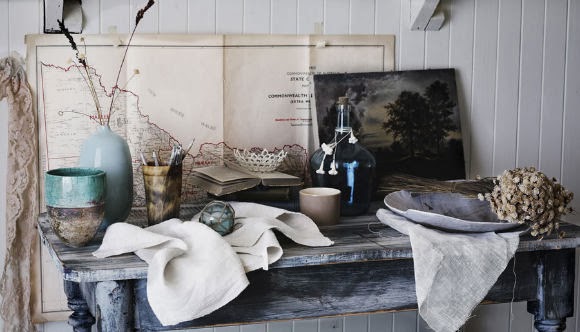
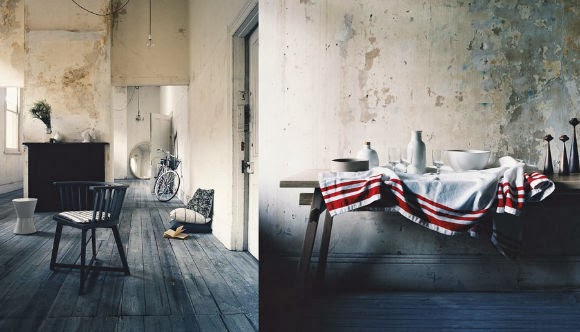
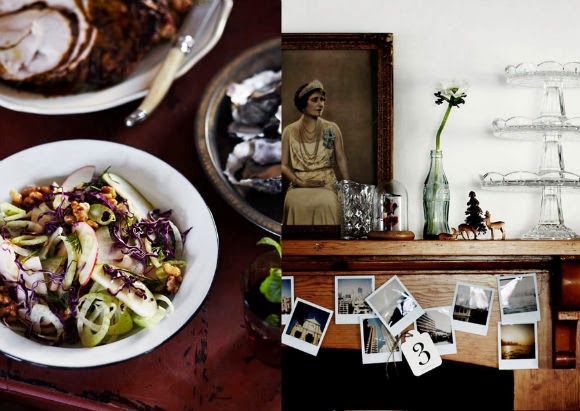
Being an engineer at heart, it is sometimes difficult to comprehend the role some functions play in the realization of a project ; any project. This may be a universal truth, and you may have faced it repeatedly (as I have) in your life so far, but more true you may find that applies in staged photography ; especially if you are an outsider to that particular market, and don’t know the modus operandi. In staged photography (the one you predominately come across as you leaf through a lifestyle magazine) there exists a function, named styling, performed by a person, named the stylist. You know this of course ; it began with your hair (hair stylist) in your beauty salon, but easily transgressed to all other areas, with the most acclaimed of all : the clothes stylist. Now there is a universal term, namely “prop stylist”, that describes what a person does, who styles objects for photographs, film, and television (and gets paid by someone else for doing so). “Food styling”, ie the function where a person is employed to make food look attractive in photographs, may be considered as a subset.

The reason why all that is difficult for me to comprehend, is actually not the lack of necessity of employing such functions in the course of a project, but quite the opposite, as a matter of fact. You might have expected that the photographer, who has the “keen eye” would take care of composition somewhat literally in staged photography, but it has proved in the course of business that (a) photographers do not have the time to actually deal with stuff staging, since they are busy with taking the damn photo at the first place, and (b) the photographer does not have that “eye” we talked about (which is more common as one might expect, when it comes to commercial/business photography). So it essentially boils down to a person that has an ability to not only be able to select and bring objects together in an aesthetically pleasing way, but also possesses a feel for how to create an emotional connection. Glen Proebstel is an New York based stylist who produces work of a truly international standard, and falls under that description.

The quality of Glen’s work comes from the understanding of fundamentals such as scale, texture, placement, colour and light, but the magic comes from the unexpected, the witty and the quirky play that underpins his signature style. He is collaborative by nature and the work he produces is often the result of working closely with photographers and clients to draw out the potential in any brief. He is a rare combination of a highly creative talent who knows how to be organized and plan so that the beauty of the result is no mere accident.

12 December, 2013

the largest business incubator to be realised in Paris

The historic Halle Freyssinet building in the heart of Paris will soon be transformed into a huge business incubator for 1000 Start-Ups. Designed by Wilmotte & Associés SA, the project will be the largest incubator in the world and it incorporate utilize shipping containers, flexible design solutions, and daylighting while retaining the original charm of the station. The renovated rail station have capacity for 1,000 start-ups along with facilities to foster and support the companies' growth.

The Halle Freyssinet freight station was originally built in 1920, but in recent years it has been used as a reception and event center. This past summer Xavier Niel, founder of Le Monde, bought the hall for €70 million to turn it into a business incubator. Wilmotte & Associés SA is renovating the station into a 30,000 square meter flexible working space for 1,000 startups. While there are many start-up incubators around the world, this is likely to be the largest. 1000 Start-Ups will provide space for co-working areas, a fablab, a large auditorium, meeting rooms, large work spaces, and a bar-restaurant that will be open 24 hours a day.

The project is intended to promote and support emerging new talent and businesses in France so that the nation stays competitive in the global market. Flexible spaces mixed with innovative building technologies and digital capabilities will provide a creative and vibrant space for companies to grow and collaborate. The existing structure will be maintained to preserve the building’s industrial heritage. Daylight will stream down through rooftop skylights and shipping containers and modules will be installed inside the large space to create offices and meeting rooms. Work is expected to begin in June of 2014 and it will be completed within two years. The project was developed by the Municipality of Paris with financing from Caisse des Dépôts et Consignations and Xavier Niel.

10 December, 2013

It’s not about me, it’s about you… the 21 questions you need to ask in a job interview

Well, you are not going to read all 21 here, since this article is a repost from the original, so please continue to read the remaining there. According to Marc Cenedella, the New York City Start-up Founder, we often forget what a job interview is all about. It sure feels like it’s about you, but it’s really not. According to Marc : “An interview is actually about how you can help your future boss and future employer succeed. It’s about finding out what their requirements and hopes are and matching up your background and experience with what they need. Overlooking these basic facts about the interview is easy. There’s so much else going on in your work, your life, and in your job search, that you can forget to look at the interview from the interviewer’s point of view. And that’s a shame, because you need the interviewer to walk away from the interview thoroughly impressed.”

He goes on to argue that “… by asking these questions, which focus on the needs, traits, and preferences of your future boss and future employer, you’re demonstrating that you are somebody who is genuinely interested in their well-being. And the more interest we show in others, the more commitment they show to aiding our cause.”

That to be honest might seem a bit overzealous or pretend, but I guess that the extend you choose to follow his advice, or with what “flair”, is completely up to you, your interview style, and maybe how much you want the job. Eitherway, it is essential to project maturity, and communicate endurance and vision. Here are 10 of the original 21 questions :

1. What’s your (or my future boss’) leadership style?

2. About which competitor are you most worried?

3. How does sales / operations / technology / marketing / finance work around here? (I.e., groups other than the one you’re interviewing for.)

4. What type of people are successful here? What type of people are not?

5. If I get the job, how do I earn a “gold star” on my performance review? What are the key accomplishments you’d like to see in this role over the next year?

6. How did you get your start in this industry? Why do you stay?

7. These are tough economic times, and every position is precious when it comes to the budget. Why did you decide to hire somebody for this position instead of the many other roles / jobs you could have hired for? What about this position made you prioritize it over others?

8. What is your reward system? Is it a star system / team-oriented / equity-based / bonus-based / “attaboy!”-based? Why is that your reward system? What do you guys hope to get out of it, and what actually happens when you put it into practice? What are the positives and the negatives of your reward system? If you could change any one thing, what would it be?

9. How does the company / my future boss do performance reviews? How do I make the most of the performance review process to ensure that I’m doing the best I can for the company?

10. What is the rhythm to the work around here? Is there a time of year that it’s “all hands on deck” and we’re pulling all-nighters, or is it pretty consistent throughout the year? How about during the week / month? Is it pretty evenly spread throughout the week / month, or are there crunch days?

Carefully consider what is said during the interview. As you would raise a red flag if you had NO questions, so you raise a red flag when you ask questions that have already been answered. Be sure to plan several questions for your interview so you aren’t stuck if some of them are answered in the general flow of the conversation. Get hired by being prepared and leaving a positive impression.

04 December, 2013

the Gingerline : nomadic restaurant & art space

Gingerline is a clandestine dining adventure operating in secret and changing locations along the East London Overground (Note : The “Gingerline” refers to the East London Overground between Crystal Palace and Highbury & Islington). Gingerline is powered by founders Suz Mountfort and Kerry Adamson, two adventure-loving food fanatics who adore art, performance and design, diced with daring. Back in 2010 they decided to fuse it all together, rope in some friends, and perform a “for the love” experiment to be shared with London’s bravest diners.


After cartwheeling and cavorting along the line, popping up in seven different locations, Gingerline HQ was launched as the boldest dining experiment. Running for 8 sold out months and feeding 10,000 hungry guests, Gingerline swore them all to secrecy and then went underground… Now Gingerline are back for more mind-blowing adventures! A brand new project, location and a parallel reality in which only the brave will dine… Please welcome : The Hideout. A top-secret, exclusive happening at a mystery location somewhere along the East London line: time to relinquish control, and let the revels commence! Go here to find out more (and book your place). One of the directors of Gingerline, dealing with overseeing and producing all of its creative elements was Syd Hausmann, who designs, crafts and illustrates things for paper and pixels. See her work here.

24 November, 2013

shapewear, padded or enhancing underwear, the Wonder(bra) options for men

A foundation garment (also known as shapewear or shaping underwear) is an undergarment designed to temporarily alter the wearer's body shape, to achieve a more fashionable figure. The function of a foundation garment is not to enhance a bodily feature (as would, for example, a padded bra) but to smooth or control the display of one. [1] Men's padded underwear on the other hand, typically serves one of two purposes : either it protects your anatomy from trauma or it makes your anatomy look bigger. In some cases it can serve both purposes. Whichever is the case, it only makes sense to invest in quality padded men's underwear because either your manhood or your reputation is a stake.

Women have worn foundation garments, such as corsets and brassieres, for a very long time. Some have been essential to the fashion trends of the time. Others have been born out of the need for women to feel more secure. The same we may reasonably say that applies to men also. Men have been in the past, but increasingly do so in the past few decades, wear undergarments that help them “restrict”, and in other words conceal non-aestheticaly pleasing body-shape features. This is where shapewear comes in use, and thus displays an increasing raise in popularity and sales, especially after the 90s.

Depending on what sports you are into, men's padded underwear might be required to protect your parts. Cycling can do a number on them, particularly if you are riding long distances or over bumpy terrain. Martial arts are another type of sport where protective underwear is absolutely mandatory. Kicks and punches landed by your opponent in an unprotected groin could have you singing soprano for days. [2] Again if you are looking for comfort and cushioning, due to age and joint stiffness, padded underwear offer the level of sport necessary. If on the other hand, you are looking to augment either your package or your rump, men's padded underwear is a simple, inexpensive and temporary option that is far more practical than surgery.

There are numerous diets and routines that claim to help men lose fat and build muscle in implausible lengths of time. The truth is that it takes hard work and determination to obtain a great physique. For those still looking for a quick fix without the effort shapewear will give that competitive edge. At first glance, shapewear looks like a regular shirt. Upon closer inspection, the material is lined with padding to enhance the key areas involved in muscle building, the pectorals, shoulders, biceps and triceps. Designed to be worn underneath regular clothing, the shirts are made of material that allows the skin to breathe and ensure wearers don’t get too hot. [3]

Adapted from a blog for women (since women know better, they have been doing it, like … for ages) on advice of “How to Choose the Right Shapewear for you” [4] :

1. Purchase the right size.  Buying a smaller size does not make you thinner, it actually will create more problems by pushing things into places they should never be.
2. Focus on the part of the body you want to shape.
3. Define the purpose. Ie. You want it for sports, or a special occasion where it will be seen.
4. Make sure to choose the level of support you need.
5. Try it on! Never, Never , Never buy shapewear WITHOUT trying it on! 
6. Put it on correctly.
7. We sweat, so  if you are in a high temp region look for light weight summer style shapers.

When choosing padded underwear for men there are different styles and comfort levels just as there are for women. There is the brief that comes in normal or low-rise, a pair that can lift and push up what is already there, the padded jock, which is very popular, as well as many other types. There is padded underwear for men that are just like that for women.  They contain pockets that one can insert pads into. One can choose between silicone and foam pads much of the times depending on what is more comfortable to the individual. There are pairs of padded underwear that do not have pads but actually provide a lift and separate feature. This allows the man to work with what he already has instead of relying on pads. Just like padded panties for women, for men there is also waist slimming underwear. Whichever is the case a man still may need the extra feature of a tummy tuck, and luckily there is also padded underwear for men that provide that slimming effect. [5]

Some companies out there :

04 November, 2013

Zazou bazaar & café in Lisbon

Zazou is a very curious and interesting place, and they managed to have two things most people love when they’re traveling, a nice typical shop + typical delicacies and wine! This can be a winning commercial strategy. If your average traveller can buy some local produce / things, while having a glass of wine and sample some of local food or delicacies, than you have the potential of maximizing your turnover. On their facebook page you can read the following… “some call me the madness, others, the flare of irreverence. poets say i am a salon and artists claim me as a new rendez-vous point. gourmands say that i am a treasure trove of the noblest Portuguese fare, retrieved from by-gone days. some call me courage in times of crisis, others see in me a gamble on just the right measure of innovation. i have been called a mecca of true Portuguese arts and crafts, the counterculture to high prices, I've been called a bazaar or a wine shop but i admit, i prefer to be called simply Zazou.”

01 November, 2013

find a Crowd to CrowdFund your project

I am sure you are all aware of Crowdfunding models, when it comes to raising money for a project. A relatively unsure trend at the start, has in the course of these last few years, built up speed, and now is considered the main option for independent producers or individuals, to take their project or product to the market, sidestepping more conventional sources of money raising, like going to the bank, or seeking a venture capital. It capitalizes on two factors : (a) the all-time successful concept of raising money from close family and friends, and (b) the willingness of otherwise unreachable (to you) people, to become customers and purchase your project or product if available. Both were facilitated by the advent of numerous Crowdfunding sites. 

What is Crowdfunding ?

Crowdfunding, as its name suggests, is a funding method where common people like you and me, henceforth the crowd, fund your personal or business project with their own money. There’s a term that we commonly use to describe this money-giving action; it’s called a donation. The main difference between Crowdfunding and donation is that Crowdfunding is tied to the American JOBS act that allows online sales of small stock to a huge pool of investors, although the act has not been passed yet. Nonetheless, you could still embrace the Crowdfunding method to raise your project funds, as long as you don’t sell any kind of stock. Different Crowdfunding sites could have different a purpose or approach , but overall the concept is simple – you post your project to a large group of site users, or "potential investors", and they will fund your project with money if they are interested in the project. you can start a Crowdfunding exercise for free as you will only be charged when your project has raised some funs or the full amount. There’s nothing to lose and this is great for publicity. [1]

To put it in context : Crowdfunding (alternately crowd financing, equity Crowdfunding, crowd-sourced fundraising) is the collective effort of individuals who network and pool their money, usually via the Internet, to support efforts initiated by other people or organizations. Crowdfunding is used in support of a wide variety of activities, including disaster relief, citizen journalism, support of artists by fans, political campaigns, startup company funding, motion picture promotion, free software development, inventions development, scientific research, and civic projects. [2]

[Fig.]
Sep.2012, Money from the Crowd,

Crowdfunding alternatives / sites

I have recently come across a Crowdfunding platform operating in Australia, named Pozible. Pozible is a Crowdfunding platform and community-building tool for creative projects and ideas. It was developed to help people raise funds, realise their aspirations and make great things possible. Crowdfunding with Pozible is a way for motivated makers to access funding beyond ‘official’ channels by talking directly to switched-on consumers, fans, peers and like-minded strangers. Whether you’re a part-time photographer, aspiring illustrator, avant-garde kazoo virtuoso or app-developing wizard, you can host your project on Pozible. I liked the concept, the overall look and feel of their site, as well as the fact they were recently reaching out to the Universities R&D (research and development) community.

[Fig.]
The power of Crowds

Like Pozible, there are numerous others, incorporating various features and novelties, that could make them stand out, and reach their audience. Probably the hottest Crowdfunding site on the Internet is Kickstarter, which raised a total of $220 million from 61,000 launched projects so far. Thousands explore its listed projects every second waiting to give away their money to the project they think is most deserving. Kickstarter accepts all major kinds of creative projects but not for causes or awareness campaigns, charity or scholarships, and definitely not for vacations or a new digital camera. The submission process is really intuitive and straightforward, you just need to sign up an account, then fill out your project details. You are encouraged to describe everything in great detail, as there will be crews reviewing your form and determining whether to accept your project or not.

[Fig.]
JUNE 2013 ISSUE OF INC. MAGAZINE

Indiegogo, Bolstr, Fundable ; the list goes on. With the SEC poised to allow projects to offer equity, Crowdfunding has the potential to revolutionize how entrepreneurs raise money. (For now, you have to offer some kind of reward in exchange for donations.) But all sites are not created equal. Some specialize in nonprofits, or in certain types of products; others offer consulting services in addition to sourcing funding. In an increasingly crowded and complicated marketplace, where should you turn to fund your endeavor ? Follow the supplied map on the figure above. [3]

[Fig.]
Want to give crowdfunding a try, but not sure where to start ? ideacrossing.org have put together a quick cheat sheet to help you navigate which crowdfunding site might be best for you.

Notable also is GoFundMe, where the fundraisers get their cash as it comes in ; no need to wait to reach a predetermined goal like Kickstarter. The company is filling yet another unexpected niche in the burgeoning crowdfunding industry. Launched in May 2010 and based in San Diego, CA, GoFundMe has quickly become the #1 crowdfunding website in the world for personal causes and life-events. Hundreds of thousands of people have raised over $130M for the things that matter to them most. GoFundMe users can choose to create a) Personal Donation Campaigns, b) Charity Fundraising Campaigns or c) All-or-Nothing Crowdfunding Campaigns.

Since the list of Crowdfunding platforms / sites increases each month, it is rather pointless to list them all here. However at the end of this article, please find locations / other articles that attempt to list or group all these available sites out there.

Start a Crowdfunding site

You can now start your OWN Crowdfunding site. Get a white label crowd funding site set-up and ready to accept payments in two minutes with CrowdfundHQ.


Shaping a new Economy

Crowdfunding is there “to bring your product from fruition to completion”. Crowdfunding has revitalized the Arts at a time when public programs that support it are steadily dying off. Crowdfunding is growing a market for impact investing in social enterprises, marrying the worlds of entrepreneurship and philanthropy, and helping a broader base of investors to back companies for both profits and purpose. Crowdfunding is accelerating angel investing and creating an entirely new market for investment Crowdfunding for businesses. So get involved and join a Crowdfunding community today. You’ll make a difference for a project or business owner, and also help build a new and more collaborative economy. [4]

“This has been an age of angels stepping up to fill the voids left by bank loans and VCs that were decimated by the financial crisis,” said David Drake, a Partner with LDJ Capital in New York. “Angels stepped in to fill the gap and now crowdfunding, which we estimate will hit $6 billion globally in 2013, is the new kid on the block.” [5]


Lists of Crowdfunding platforms, available on the Internet :
Top 100 Crowdfunding Sites for Equity-based, Rewards-based, Perks-based and Donation-based Fundraising Campaigns, http://crowdfundingpr.wordpress.com/2013/06/02/top-ranked-crowdfunding-sites-for-rewards-based-perks-based-and-donation-based-fundraising-campaigns/
Top Crowdfunding success stories (to jumpstart your appettite) :

check out this assortment of logos http://www.crowdsourcing.org/cfsurvey4Q2011

Other resources :
Daily Crowdsource is the #1 source for crowdsourcing related news, http://dailycrowdsource.com/
welcome dear reader.

blank

What you are browsing through is the initial form of a gazette, realised at this stage by a collection of posts brought together, from various fields & selected topics, aiming towards your entertainment and information. Some are own generated, others are processed re-ups from the blogosphere. Please feel free to browse, read, and distribute the content here.

blank

If you find what you read here as interesting, entertaining or thought-provocative, please tell it to your friends. New readers are always welcome. If you have copyright claims, please let us know, and we will amend accordingly.

blank

Images presented herein, are the property of their originators, unless stated otherwise. The METRONOME gazette wishes to declare that to the best of its knowledge, all photos and information presented in this website are true and valid, however it carries no responsibility as to the accuracy of the depictions, or wording of the posts, that are not of its own origination.

blank

Please do not hesitate to contact us with any inquiry or question you may have. See the Contact details section.
  

blank

about

blank

contact

blank

editorial

blank

theNEWSroom

blank

theMAGAZINErack

blank

DIY projects

blank

GAMESZONE

blank

GoingOUT

blank

Food4Thought

blank

PROJECTS

blank

blank

blank