08 June, 2013

the travel documents of Eric Valli

Eric Valli, is a French photographer and film director passionate about showcasing the most remote and inaccessible locations in the world, creating work for the likes of National Geographic and the Sunday Times. Notable parts of his work are those comprised by the photographs from the high Himalaya’s where he spent 20 years trekking with the Dolpo-pa people, those in India with the children of the dust who spend their days lugging heavy bricks, and those in Nepal documenting the fearless Gurung men who harvest nests from the world’s largest honeybee.

"We can visit distant areas of the world and not feel like we have left our city, the same shops, restaurants, and brands surround us, culturally you could say we are slowly becoming one. Eric Valli has made it his life’s work to document the diversity that human kind does behold. it’s a refreshing reminder of how remarkable the world can be, highlighting societies that view living at its simplest form, survival." [1]

07 June, 2013

James Kingston's crane stunt

James Kingston is a parkour and freerunning athlete, that enjoys pushing himself to the edge. In his FB profile it just writes : "constantly looking for adventure". Living in Southampton, UK, his city is his arena, where he performs most of his feats. The latest one is documented on a video (that has gained popularity really fast) showing him climbing a 250ft crane on a local building site and then dangling from by it by one hand. According to the video's description online, Kingston "didn't go up there to die. He went up there to live." See a collection of his videos here.

Taken from the news post in Yahoo News : "He scaled the crane with three pals and even stayed up there for an hour 'enjoying the view' before coming back down. The crane is just over 250ft tall and 150ft across. It took about 20 minutes of slow climbing and shooting to reach the top." Then he added : "I didn't plan to hang, no. It's just the kind of thing that you may as well do while you're up there. I ended up doing it three times, one was shot from above, another shot POV style and the last shooting photos POV style. I wasn't concerned about anything. Pulling back up is very easy." [1]


06 June, 2013

Origo coffee shop

Two hundred and seventy six teacups are suspended from the ceiling of this coffee shop in Bucharest by Romanian studio Lama Architectura. Origo is the answer to the demand of a very passionate barista for a place for himself that should function as a coffee-shop during the day and a cocktail bar during the evenings. Read some reviews here.

In the words of the architectural office responsible : "We like to think of it as his personal urban living in which we discovered some fantastic, authentic and old wooden beams after dismantling the existing plaster ceiling. We kept them and painted them white. After understanding what is important from his point of view for a great coffee moment, we tried to mirror his beliefs and create a space that would allow coffee to be the star. Our goal was to create a relaxed atmosphere using natural materials and colors, but also have a little tension using contrasts (dark grey versus light wood color, wood versus metal)."

a modern Nest in Vietnam

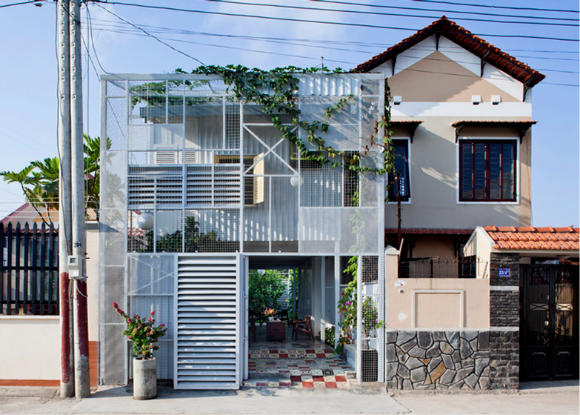
Vietnamese architects a21studio, have created this modern Nest in Vietnam. The house is designed for a middle-aged newsman who has been working in years for Vietnam architectural magazines. The site is located at the outskirt of a new city in being urbanism with a variety of housing architecture styles in its surrounding. Therefore, both the architect and client came up with the idea that the new house should be looked green, but not compromise to its comfortable and specially should not much differentiated to next-door neighbours.

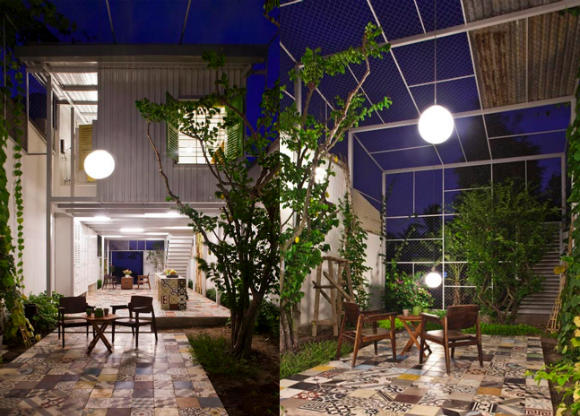
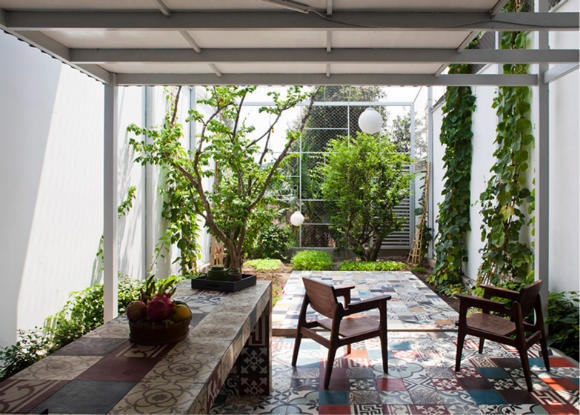
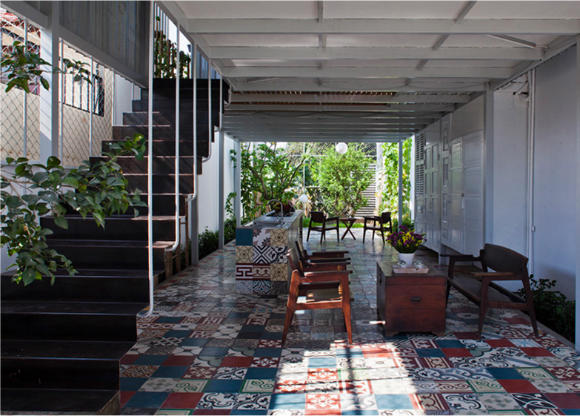
Within his constraint budget, a light structure as steel and metal sheets is applied instead of bricks and concrete as usual. Moreover, unused furniture, abandoned but still in good condition, is considered as an appropriate solution for most parts of the house which not only reduces construction cost but also gives the house a distinctive look, the beauty or serenity of old items that comes with age.

Typically, the house is structured into two vertical parts; two private bedrooms on the upper floor, while kitchen and living room on the ground floor and opened to nature without any door or window. This makes the bounder between inside and outside becomes blurry. Besides, by diminishing living space to just sufficiently fitted and leaves the rest intended uncontrolled, the architect attempts to convey the sense that the natural environment outside is larger and closer, as at any views from the house, the trees can be observed with its full beauty. In the other words, the trees are used as the building's walls, and the house would provide a variety of links between trees and people.

04 June, 2013

La Biennale di Venezia

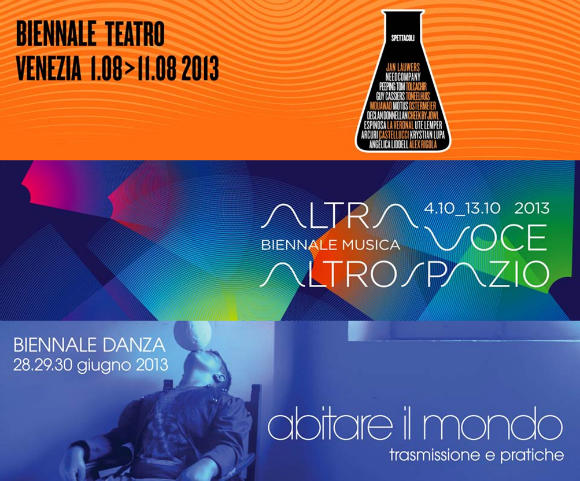
The Venice Biennale (La Biennale di Venezia) has for over a century been one of the most prestigious cultural institutions in the world. Ever since its foundation in 1895, it has been in the avant-garde, promoting new artistic trends and organising international events in contemporary arts. It is world-beating for the International Film Festival, for the International Art Exhibition and for the International Architecture Exhibition, and continues the great tradition of the Festival of Contemporary Music, the Theatre Festival, now flanked by the Festival of Contemporary Dance.

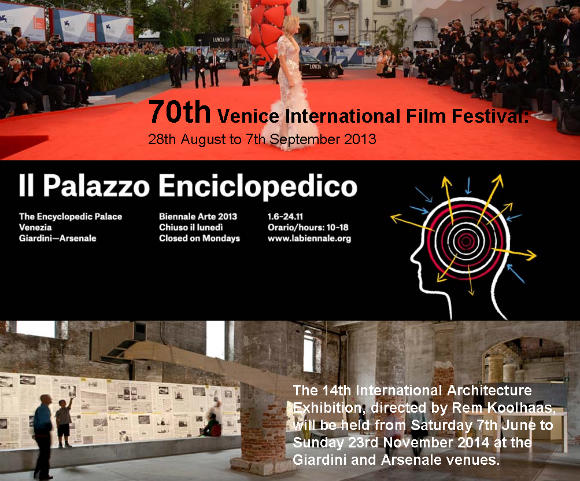
In 2013, the Biennale presents the 4th International Kids’ Carnival (2 to 12 February), training and performing activities within the Dance section (2 May to 30 June), the 55th International Art Exhibition (1 June to 24 November), the 42nd International Theatre Festival (1 to 11 August), the 70th Venice International Film Festival (28 August to 7 September), and the 57th International Festival of Contemporary Music (4 to 13 October). New permanent activities run alongside these major events, thanks to the newly available refurbished permanent sites in Venice (Ca’ Giustinian and the Sala delle Colonne for exhibitions and meetings; area for kids; new Biennale Library-ASAC at Giardini for study, research and meetings; Workshops and Educational activities featuring master classes, projects for schools and guided tours; in addition to the Historical Archives of the Biennale at ASAC-VEGA and its collections available for consultation).

In specific, the 55th International Art Exhibition of la Biennale di Venezia under the artistic direction of Massimiliano Gioni carries the title: "Il Palazzo Enciclopedico / The Encyclopedic Palace". With this choice Massimiliano Gioni is evoking the self-taught Italian-American artist Marino Auriti who on 16 November 1955 filed a design with the US Patent office depicting his Palazzo Enciclopedico. This imaginary museum was meant to house all worldly knowledge, bringing together the greatest discoveries … in a 136-story building that would stand 700 meters tall and take up over 16 blocks in Washington, D.C. "Auriti’s plan was never carried out, of course, but the dream of universal, all-embracing knowledge crops up throughout history, as one that eccentrics like Auriti share with many other artists, writers, scientists, and prophets who have tried—often in vain—to fashion an image of the world that will capture its infinite variety and richness."

03 June, 2013

Baxter Finley barber & shop

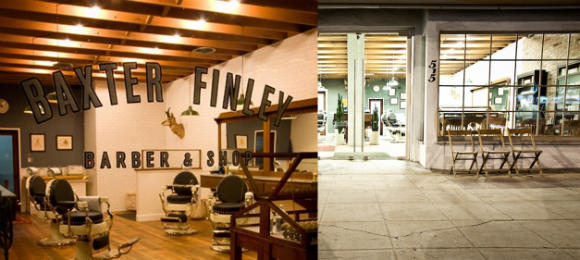
For over 40 years, Baxter of California (alt webpage here) has been known for providing premium men’s grooming products.  This month, the company opened a shop on La Cienega Blvd. in Los Angeles, CA, called Baxter Finley Barber & Shop.  Named after the company’s founder, Baxter Finley, the shop showcase their products and barbers provide cuts and shaves for patrons. The old world inspired design is masculine combining rugged features like Douglass fir flooring and exposed wood beams along with the sleek finishes including subway tile and marble counter tops.  The highlight is the restored Koken “White King” porcelain and leather chairs which are from the early 1900’s.  Kudos to Baxter for creating a refined shop that feels modern while retaining the tradition of the old school  barber shop experience. [1]

Each service is tailored specifically to hair and skin type, and customer requests. Hair cuts include hot towel and razor clean up on the side and back of the neck. The Baxter Finley straight razor shave is accompanied with custom B.F. hot towels, and no using cartridge style blades. Read their concentrated grooming wisdom here.


Taken from their history page : "Finley is the unsung father of the modern men’s skincare industry.  Moving from New York City to Los Angeles to work in the fast paced world of advertising in the mid 1960’s Finley realized the constant heat and sun was doing a rough number on his skin. After searching high and low for a moisturizer that wasn’t pink or floral, he finally gave up and created his own, which he called Super Shape. The first line of grooming products created just for men, which he named Baxter of California, was launched from his Beverly Hills headquarters in 1965. Today Baxter of California has a new look and feel with updated packaging, exciting new imagery, new cutting-edge men’s products that target very specific skincare needs, and improved formulations that combine the trusted traditions of science with fine ingredients with nature. Ideal for all skin types, the high-tech assortment works alone or in tandem, providing men with intelligent skincare solutions to anti-aging, shaving, cleansing and basic skincare."


KOOK Osteria & Pizzeria

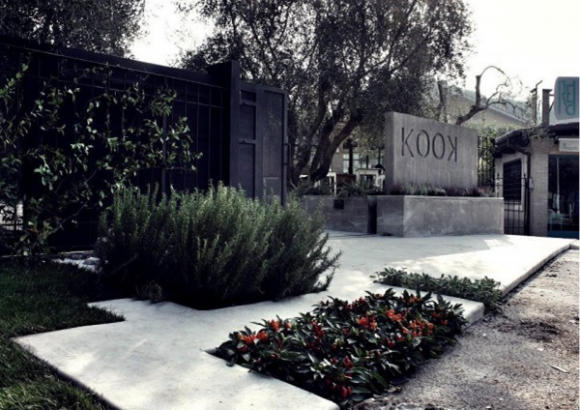
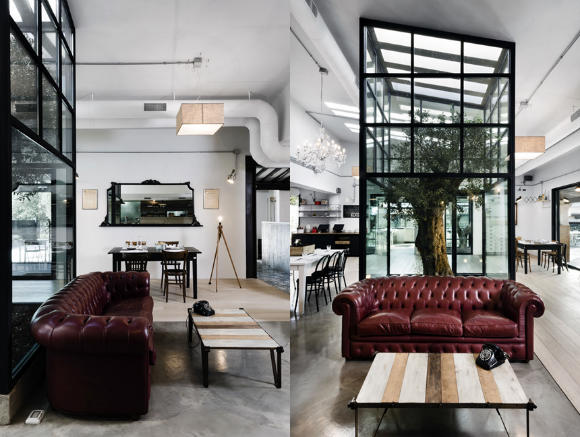
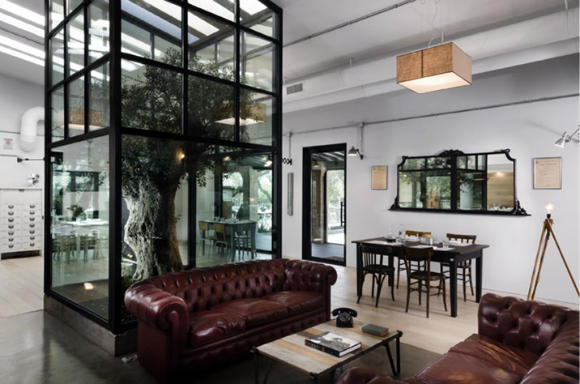
KOOK Osteria & Pizzeria, opened its doors just outside Rome's Olgiata in 2012. The young architectural firm Noses Architects founded by Mohamed Keilani and Luca Gasparini put their best foot forward to create a space that compliments the essence of the dishes while at the same time retaining that overboard-Italian character. With one glimpse at KOOK you instantly know that this is a place where you can eat, lounge and have one of those wonderful days where you go for lunch and leave from the table late evening. Through the finishes and décor, the character of the interior culminates in what can only be described as contemporary nostalgia. [1]

To strengthen the relationship between innovation and tradition, between grandmother's recipes and recipes from chefs, an olive tree, symbol of wisdom, longevity and Mediterranean essence, embedded in the glass. A green aquarium that imprisons one of the true symbols of culture and local cuisine, making it free, however, catalyst of light that spreads throughout the room.The key word is harmony. Walking into the room, you can discover an endless array of details, obvious (such as the Bianchi bicycle) or hidden (such as exposed pipes from sinks, just they used to be), huge or tiny, communicating with each other in a perfect industrial style, vintage, but still faithful to our Mediterranean identity.

The know how to dose planning by Noses also reads in the refined combination of different types of matter to floor: from the honey colored parquet flooring, industrial resin, the classic Mediterranean colors of the tiles in cement.If you do not have under careful enough to grasp the multitude of stimuli from the container and content, the designers have denounced the essence of certain objects (or incentives to light perception), affecting words in wood and concrete.The spatial continuity - visual, and then of color and light, with the outside is studied because the olive trees, colored symbol par excellence of the Mediterranean, did peep through the restaurant tables. Read some reviews here and here.

South Yarra residence in Melbourne

Built in 1929 the property began life as two duplexes, one of which was originally inhabited by the famous artist Sunday Reed before her move to Heide Gallery. Positioned in Melbourne's Domain precinct, this residence meshes the character filled historic architecture with the crisp detailing of a modern addition. Restoration of the dwelling internally and externally and thus creating united spaces was a key driver with the project architecturally, with the former expressed as an imposing building in the streetscape composed of many forms, including French Chateaux, Edwardian and Victorian.

The architectural masterplan sought to celebrate the original structure and well proportioned spaces whilst updating them to provide a cohesive series of interior spaces to suit a family of five. A bold two storey glazed structure was added to the rear west face of the property to bring light into the heart of the home, defining a new circulation core to the building. A large glazed skylight tracks the path of the sun throughout the day, filling the interior with light. Openings are lined with the introduction of steel portals and framing devices for reveals, panels and blades, marking the transition from original form to contemporary space, existing built form with that of the new, highly contemporary addition.

Carr is a multi-skilled firm of Architects and Interior Designers. The practice was founded by Sue Carr in 1971 when she co-formed Inarc Design – now Carr Design Group. In this time Carr has established itself as one of Australia's leading architecture and interior design firms having demonstrated a capacity to push conventional boundaries.

01 June, 2013

China rising

Despite its increasingly secure place in the world, the People's Republic of China remains dissatisfied with its global status. Its growing material power has simultaneously led to both greater influence and unsettling questions about its international intentions. China also has found itself in a constant struggle to balance its aspirations abroad with a daunting domestic agenda. The news broadcast network Al Jazeera has featured a four-part documentary essay on the multiple facets of China, aiming to explore the rise of a very old nation in these later modern times. The following text is taken from the Al Jazeera webpage where the documentary series is presented.

After centuries of western dominance, the world’s centre of economic and political weight is shifting eastward. In just 30 years, China has risen from long-standing poverty to being the second largest economy in the world – faster than any other country in history. From angry farmers to weary migrant workers, powerful politicians and everyone in between, what China says and does, has become of undeniable importance to the entire world.


Although no other country in history has risen so quickly from poverty to prosperity as China has, for many in the world's most populous nation, those advances have come at a price. The economic reforms that made the People's Republic's rise possible have also led to a harshly divided China. Divisions whose impacts could easily spread from disenfranchised individuals to threaten the economic growth contemporary Chinese society has come to be based upon. In the opening episode of this four-part series, the stories behind these divisions are told, from the rising urban middle class to impoverished rural areas and the precarious existence of hundreds of millions of migrant workers on the fringes of some of the world's fastest growing cities.


From the ruling Communist Party to filmmakers and bloggers, more and more people in China are looking to get their voices heard. As blogs look to exploit their political potential and grassroots protests and mass incidents continue to increase in numbers, we analyse  how the country run and how do the people get their say. In the second episode of China Rising , a closer look is taken at how the people of one of the world's most powerful, yet closed states, manage to reach the masses. We interview authors who struggle with censorship and self-censorship, and examine the country's thriving film industry, which seeks to top Hollywood.


Following the revolution of 1949, legislation regarding equality was passed, which was a huge step forward for China at the time. And the economic reforms of recent decades have further improved the lives of women, yet it is the only country in the world where more women than men commit suicide, according to the World Health Organisation. So, as China surges forward, how will society change and what role will the new generation play in this new global powerhouse?


China's economic role in the world is growing at a record pace, and it is also now a key player in world politics. The country has no doubt become a global manufacturing giant, but how will it deal with issues on the home front such as increase in pollution and water shortages? Although it has been confronted with tough environmental problems, efforts are being made to solve these. In the final episode of this series, through a range of interviews from Africa, the EU, the US, and China, one tries to find out how China is positioning itself as a major global player.

Throughout the past three decades East Asia has seen more peace and stability than at any time since the Opium Wars of 1839-1841. During this period China has rapidly emerged as a major regional power, averaging over nine percent economic growth per year since the introduction of its market reforms in 1978. Foreign businesses have flocked to invest in China, and Chinese exports have begun to flood the world. China is modernizing its military, has joined numerous regional and international institutions, and plays an increasingly visible role in international politics.

Shock, soap or laser ?

"Creativity can be learned." ; this is what the Norwegian School of Creative Studies, puts forth with a very smart interactive website named "Shock, soap or laser?". There are hundreds of ways to solve a creative task. The solution is often a very different place than what you thought and on the way to the answer you will discover new stuff.

Creative processes are exciting to take part in, because you never know where you’ll end. Some of the roads exploring leads to interesting, striking or unexpected responses, while others appear to not succeed. Which track that gives the best result, you can only find out by trying different approaches and work hard. Frames are safe and well, but in a creative education is part of the point to break the rules and open the mind, to find all the solutions others miss.

Shock, Soap or Laser is actually an experiment by Norway’s Creative Vocational School. The university is using the site to promote it’s 2-year vocational programs alongside their freshly launched 2012 Bachelor’s degree in creative marketing communication. The school aims to educate people for a number of professions within the creative industries.

Note : By taking this 10-step creativity test you also entered a draw to win a mobile phone, however that competition ended on 15 April, so don't expect anything on that.

CREATIVITY TEST : GO TO THE SITE >>>
welcome dear reader.

blank

What you are browsing through is the initial form of a gazette, realised at this stage by a collection of posts brought together, from various fields & selected topics, aiming towards your entertainment and information. Some are own generated, others are processed re-ups from the blogosphere. Please feel free to browse, read, and distribute the content here.

blank

If you find what you read here as interesting, entertaining or thought-provocative, please tell it to your friends. New readers are always welcome. If you have copyright claims, please let us know, and we will amend accordingly.

blank

Images presented herein, are the property of their originators, unless stated otherwise. The METRONOME gazette wishes to declare that to the best of its knowledge, all photos and information presented in this website are true and valid, however it carries no responsibility as to the accuracy of the depictions, or wording of the posts, that are not of its own origination.

blank

Please do not hesitate to contact us with any inquiry or question you may have. See the Contact details section.
  

blank

about

blank

contact

blank

editorial

blank

theNEWSroom

blank

theMAGAZINErack

blank

DIY projects

blank

GAMESZONE

blank

GoingOUT

blank

Food4Thought

blank

PROJECTS

blank

blank

blank